NASA
OtherKnown for:
spaceflight photography; selecting and flight-qualifying off-the-shelf cameras for crewed missions, from Hasselblads on Apollo to Nikon DSLRs on Artemis II
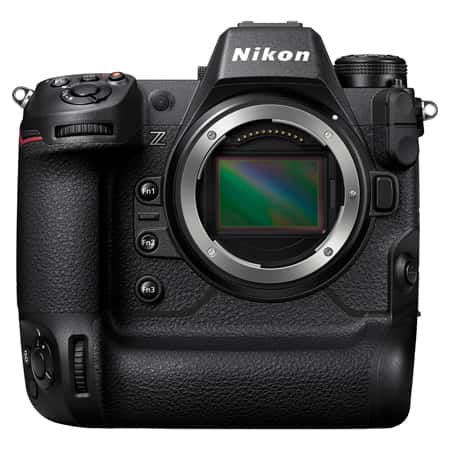
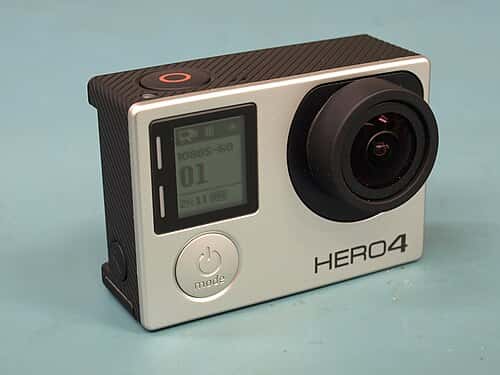
The National Aeronautics and Space Administration is the United States civil space agency, established in 1958. Beyond its science and engineering work, NASA has shaped spaceflight photography for more than six decades, qualifying consumer and professional cameras to survive launch loads, vacuum, thermal extremes, and cosmic radiation. Apollo crews famously carried modified Hasselblad 500EL bodies; the International Space Station has flown with Nikon DSLRs and the Nikon Z9 mirrorless system; and the Artemis II crew is taking 32 imaging devices to lunar orbit, anchored by two Nikon D5 DSLRs with a last-minute Z9 added to study how deep-space radiation affects its sensor, alongside roughly 28 GoPro HERO4 Black units mounted to Orion's solar array wings and inside the cabin, plus four iPhone 17 Pro Max.
NASA's Gear List(7)
Nikon
Connection Source
PetaPixelWebsite
Connection note
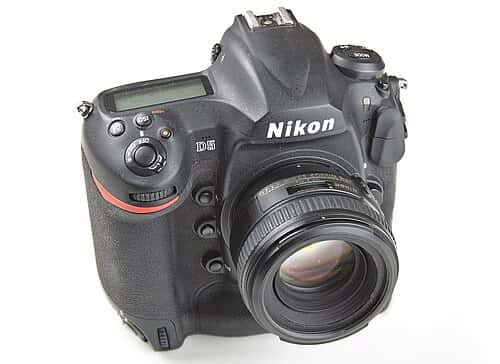
Two Nikon D5 bodies are aboard Orion as the primary stills cameras for Artemis II. PetaPixel: "The Nikon D5 remains the camera of choice for the Artemis II mission and will be assigned primary photographic duties."
Product description
Nikon's 2016 flagship full-frame DSLR. 20.8MP CMOS sensor, ISO range expandable to 3,280,000, 12 fps continuous shooting, and 4K video. Selected by NASA as the primary stills camera for Artemis II thanks to its low-noise high-ISO performance and proven radiation resistance on the ISS.
Know something NASA uses that's not listed?
Log in to submitLast updated April 8, 2026