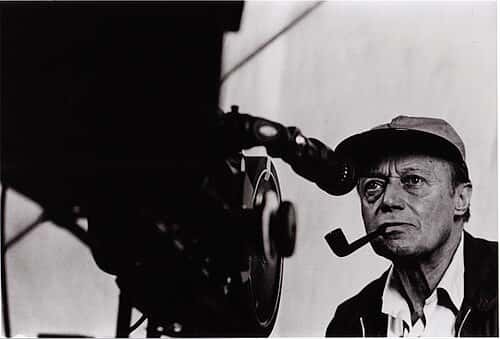
Not known. Cardiff family have given permission for it be used on Wikipedia.
Jack Cardiff
FilmmakerKnown for:
Pioneer of Technicolor cinematography, shot Black Narcissus and The Red Shoes
Education:
Self-taught through studio apprenticeship, entering the film industry at age four
Jack Cardiff began his life in cinema at age four, appearing as a child actor in silent films before moving behind the camera as a teenager. He became the foremost practitioner of three-strip Technicolor cinematography in Britain, shooting landmark films for Powell and Pressburger including Black Narcissus (1947), which won him the Academy Award, and The Red Shoes (1948). His color work was deeply informed by his study of Old Masters painters like Vermeer, Rembrandt, and de la Tour, translating their use of light into cinematic terms. He later shot The African Queen (1951) for John Huston and Under Capricorn (1949) for Hitchcock, before transitioning to directing in the 1960s. In 2001, he received an honorary Academy Award for lifetime achievement.
Jack Cardiff's Gear List(3)
Technicolor
Connection Source
ShotonwhatWebsite
Connection note
Cardiff's primary camera for landmark color films. Described as "comically huge" at roughly four-foot-six by three feet. Shot Black Narcissus, The Red Shoes, A Matter of Life and Death
Product description
The Technicolor Three-Strip Camera was a specialized 35mm motion picture camera manufactured by Mitchell Camera Corporation to Technicolor's specifications, with fewer than 35 units built between 1932 and 1954. It used a beam-splitting prism to expose three separate strips of black-and-white film simultaneously through red, green, and blue filtration, producing full-color images through a dye-transfer printing process. The system required significantly more light than standard photography, with an effective ASA of 5. Three-strip production ended in the mid-1950s when single-strip color negative film made the process obsolete.
Know something Jack Cardiff uses that's not listed?
Log in to submitRelated artists
Last updated March 21, 2026