Mark Rothko
PainterKnown for:
the color field paintings; the Seagram Murals
Education:
Yale University (1921-1923, did not graduate); Art Students League, New York (under Max Weber); largely self-taught
Mark Rothko developed his mature style of large, soft-edged rectangles of luminous color in the late 1940s, describing the works as expressions of basic human emotions - tragedy, ecstasy, doom - rather than abstract exercises. His Seagram Murals (1958–59), commissioned for the Four Seasons restaurant in New York and subsequently withdrawn by Rothko and donated to the Tate Modern, are among the most ambitious and discussed works in postwar American painting. He died by suicide in his New York studio in 1970.
Mark Rothko's Gear List(1)
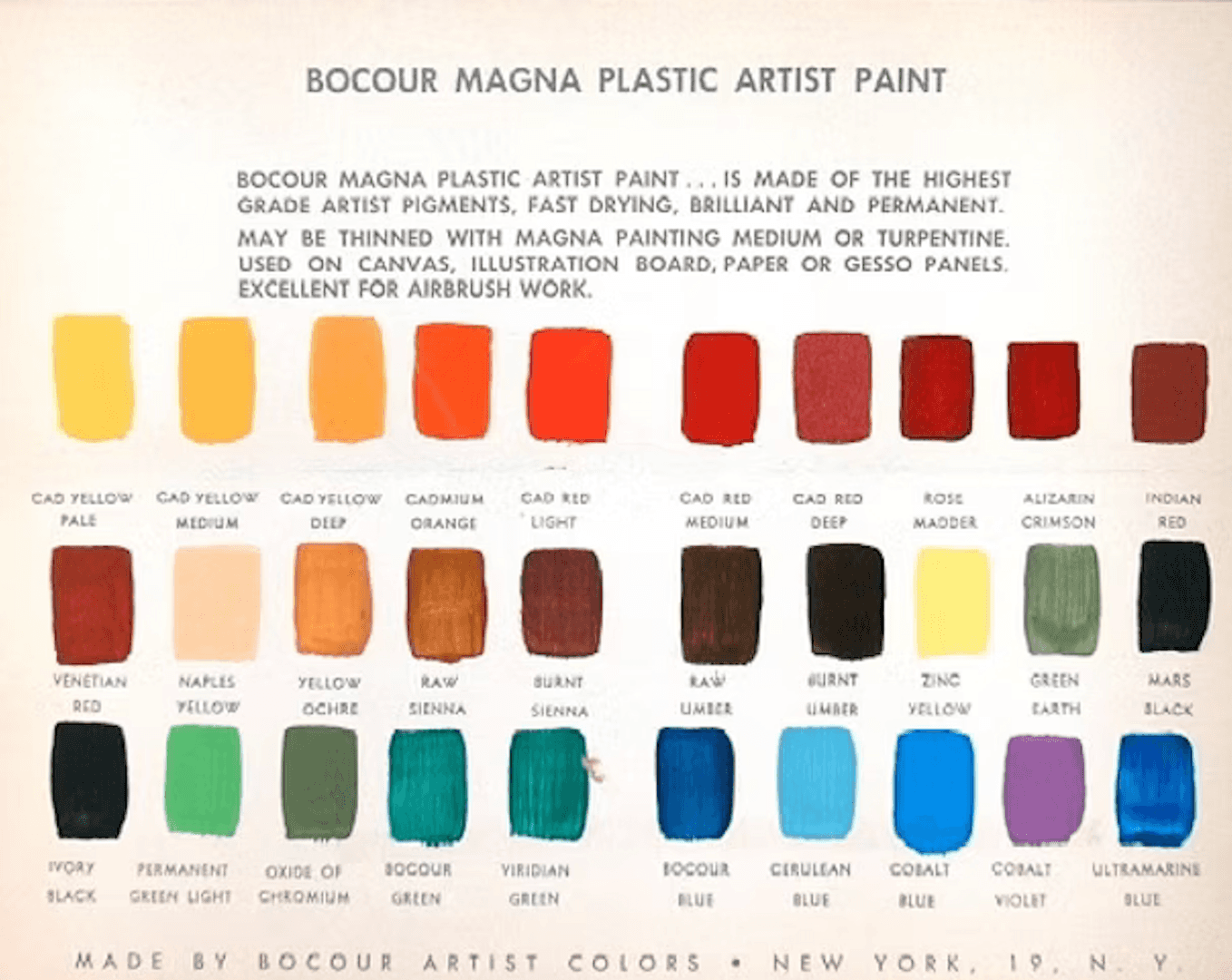
Bocour
Connection Source
WordpressWebsite
Connection note
Rothko used Bocour Magna acrylic and oil paints; he consulted with Leonard Bocour about paint formulation. Rothko's use of Magna is documented in conservation studies of the Seagram Murals and in Dana Cranmer's research on his materials.
Product description
Magna was a line of acrylic resin paints manufactured by Leonard Bocour in New York from the 1940s. Unlike water-based acrylics, Magna dissolved in turpentine and dried to a matte finish. It was used by Morris Louis, Kenneth Noland, and Roy Lichtenstein. Production ceased in the 1990s.
Know something Mark Rothko uses that's not listed?
Log in to submitRelated artists
Last updated March 20, 2026