Ari Wegner is an Australian cinematographer who grew up in Melbourne, the daughter of painter Peter Wegner. She graduated from the Victorian College of the Arts in 2004, winning the VCA Award for Cinematography. Her breakthrough came with William Oldroyd's Lady Macbeth (2016), for which she won the British Independent Film Award for Best Cinematography. In 2022, she became the second woman ever nominated for the Academy Award for Best Cinematography for her work on Jane Campion's The Power of the Dog. She holds membership in both the Australian Cinematographers Society (ACS) and the American Society of Cinematographers (ASC).
ARRI
Connection note
Product description
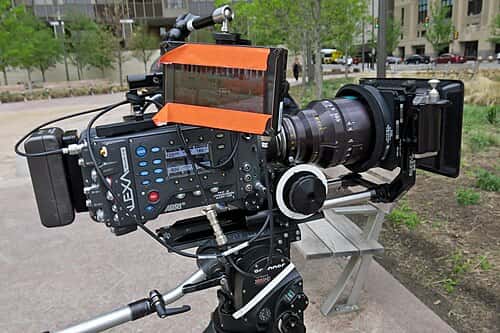
Large-format digital cinema camera with a 36.70 x 25.54mm sensor. Used on Dune, The Batman, and The Mandalorian.
Know something Ari Wegner uses that's not listed?
Log in to submitLast updated March 24, 2026
Connection note
Product description
Large-format digital cinema camera pairing the compact ALEXA Mini body with a full-frame sensor. First used on 1917 (2019), also used on Dune and Dune: Part Two.
Connection note
Connection note
Product description
Fast cinema prime lenses (T1.3) originally designed for low-light 35mm film production, with a warm, organic rendering.
Bausch & Lomb
Connection note
Product description
Bausch & Lomb cinema primes introduced in the early 1960s as the successor to the original Baltars, with a maximum aperture of T2.3. Became an industry standard through the 1970s on films like The Godfather, All the President's Men, and Paper Moon. Single-coated optics produce veiling glare and rainbow flares.
ARRI
Connection note
Product description
ARRI's Super 16mm production camera, introduced in 2006. Built with PL mount compatibility shared with ARRI's 35mm cameras, it supports frame rates from 1 to 75 fps (up to 150 fps in the HS variant) and runs below 20 dB(A) at 24 fps for sync-sound work. The viewfinder and video assist operate independently, allowing fast changeovers for Steadicam or remote operation.
Connection note
Product description
The ARRI/Zeiss Ultra Prime lenses are a set of 16 cinema prime lenses ranging from 8mm to 180mm, first introduced in 1999. Most focal lengths open to T1.9, and the lenses are designed as a lighter-weight optical match to the ARRI/Zeiss Master Primes. They feature PL mounts, robust mechanical construction, and consistent color and contrast across the full set.
ARRI
Connection note
Product description
ARRI's Super 35 format digital cinema camera, announced in June 2022. Features a 4.6K sensor (4608 x 3164) with ARRI's REVEAL Color Science, measuring 17 stops of dynamic range. Records up to 120 fps in formats including ARRIRAW and Apple ProRes.
Connection note
Angenieux
Connection note
Product description
The Angenieux Optimo 24-290mm is a 12x cinema zoom lens introduced in 2001, featuring a constant T2.8 aperture with no ramping across the full zoom range. It uses an internal focus design that maintains constant length and minimizes focus breathing, with Super 35 image coverage and a PL mount. Replaced by the Optimo Ultra 24-290mm.
Connection note
Product description
Introduced in 2010, the ARRI ALEXA is a digital cinema camera that rapidly became the industry standard for high-end film and television production. Its large-format sensor and proprietary ALEV color science produced an image quality that many cinematographers considered closer to film than any preceding digital system. It has been used to shoot Academy Award-winning films including Gravity, Birdman, and Parasite.

Emmanuel Lubezki